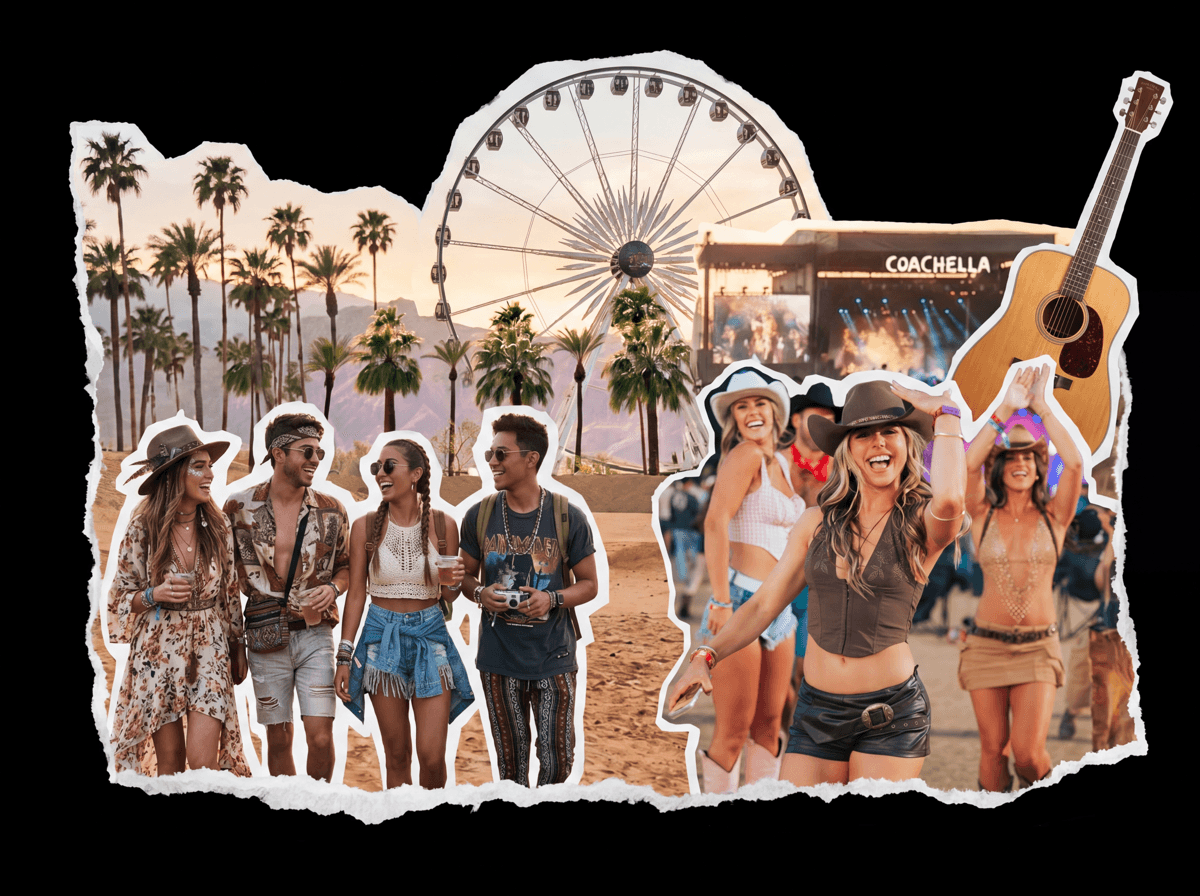
The best activations don't look like ads. They feel like experiences worth sharing. Every person who walks through one becomes a distribution channel.
Coachella draws 125,000 people per day to the desert. It sounds like a massive captive audience, and it is. But the brands that truly dominated this year weren't focused on the crowd standing in front of them. They were focused on the millions watching from their phones. That shift in thinking is the difference between a forgettable booth and a cultural moment.
The Real Challenge Isn't Whether to Activate
Most brands already know they need to show up at cultural moments. The harder question is how. The real challenge isn't deciding to activate, it's knowing what kind of activation actually moves your audience. Getting that wrong means spending a significant budget on something that generates zero conversation the moment the tent comes down.
The Desert Was the Stage. The Internet Was the Venue.
Think about the math. Each day, 125,000 people walked through Coachella's grounds. But every photo posted, every Reel shared, every TikTok uploaded reached an audience exponentially larger. The physical space was never the final destination, it was the content factory. Brands like 818 Tequila, Lemme, and Khloud understood this intuitively. They built environments designed to be photographed, posted, and talked about long after the last set ended.
When the Activation Becomes the Content
98% of consumers create digital or social content at live events. That means nearly every attendee who walks through a brand activation is a potential media channel. The smartest brands leaned into this reality by creating:
Visually striking environments built for the camera, not just the eye
Shareable moments that felt organic rather than sponsored
Experiences tied to specific audience identities and cultural values
Physical details that rewarded close-up photography and storytelling
The activation was never the end goal. The content it generated was the real product.
Why Audiences Have Gotten Smarter
Today's festival-goer can spot a lazy brand play instantly. 1 in 3 consumers now actively tune out sponsored content, and 53% report feeling less trust when a post feels like a checklist item rather than a genuine moment. Buying an impression is easy. Making someone feel something is the hard part, and the only part that earns organic reach. The brands that won at Coachella this year gave people a real reason to share, not just a prompt.
Building the Right Activation for Your Audience
Not every brand needs a pool party in Palm Springs. The right activation depends entirely on who you're building for, what moment you're trying to own, and what goal you're trying to hit. A wellness brand activation looks nothing like a tequila lounge. A Gen Z audience responds to completely different cues than a millennial one. Strategy has to come before spectacle.
Final Thoughts
The biggest lesson from Coachella's brand landscape is deceptively simple: build for the feed, not just the field. The physical experience earns the digital moment, and the digital moment is what actually scales. Brands that understand this aren't just winning festival season, they're building lasting cultural relevance. The desert is just where the story starts.